
How Claude Skills Can Completely Change the Quality of Your Work
Claude Skills turn AI from a chatbot into a business operating system. Learn how reusable AI workflows are delivering 200% productivity gains and why MENA businesses should pay attention.

Most people use AI the same way every time: open a chat, type a prompt, get a response, repeat. It works — until you realize you're re-explaining the same context, the same rules, and the same expectations in every single conversation. That's not automation. That's a more sophisticated version of copy-paste.
Claude Skills change this entirely. They turn AI from a reactive chatbot into a proactive business operating system — one that remembers how you work, executes complex multi-step workflows on command, and delivers consistent, high-quality output every time.
What Exactly Are Claude Skills?
Skills are reusable instruction packages for Claude Code — Anthropic's AI coding agent. Each skill is a markdown file containing structured instructions that tell Claude how to perform a specific task. Think of them as playbooks: you define the process once, and Claude executes it on demand.
A skill might handle anything from generating a git commit message to running a full content pipeline — researching a topic, writing an article, generating images, and publishing to your CMS. The key difference from regular prompting: skills are persistent, version-controlled, and shareable.
Skills aren't prompts. They're workflow documentation that Claude reads and executes — version controlled, shareable, and continuously improvable.
On December 18, 2025, Anthropic took this further by releasing Agent Skills as an open standard — not just a Claude feature, but an industry specification adopted by Microsoft, OpenAI, Atlassian, Figma, and Cursor. This means skills you build for Claude work across the entire AI ecosystem.
The Architecture That Makes Skills Different
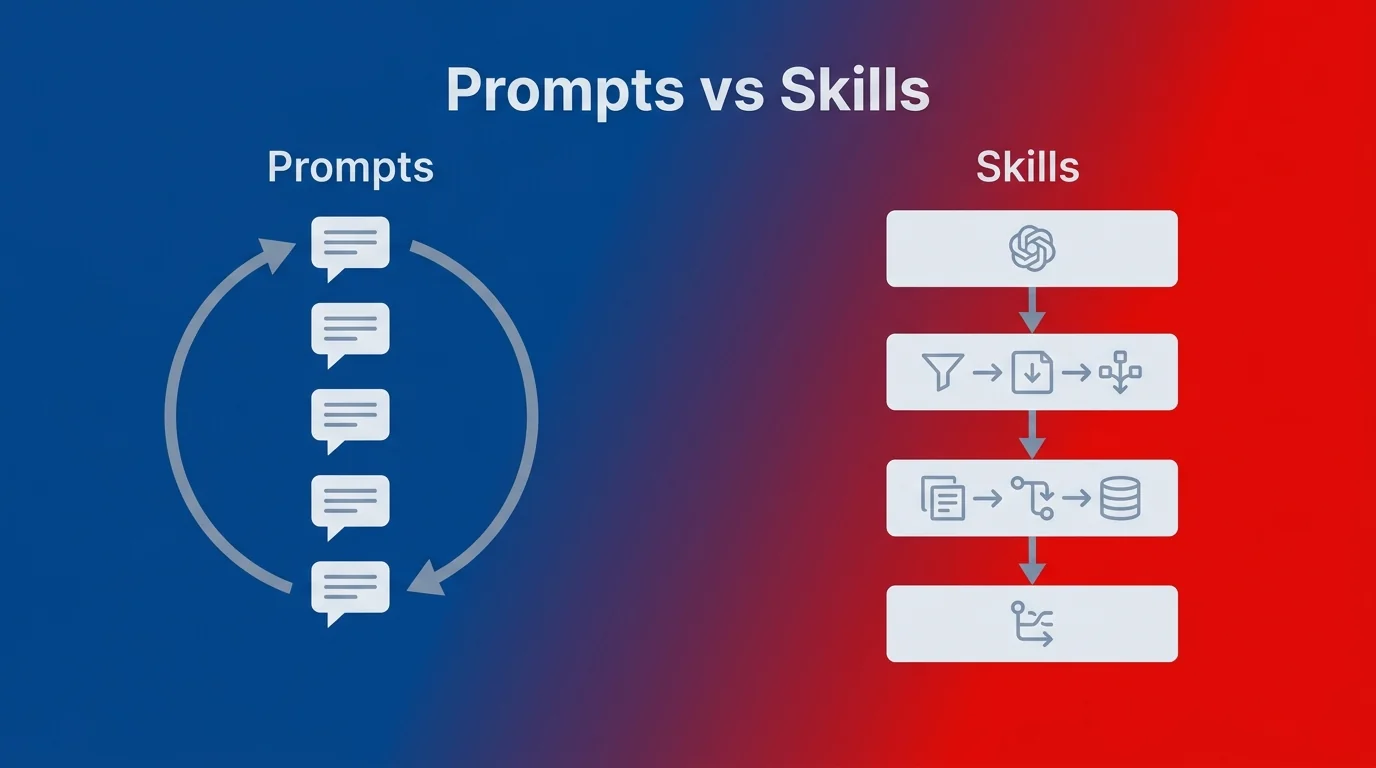
Skills vs. traditional prompting: from chaos to structured, reusable workflows
The engineering behind skills is elegant. Instead of loading every instruction into every conversation (burning tokens and context), Claude uses progressive disclosure:
At session start, Claude loads only each skill's name and description — roughly 100 tokens each
Claude's language model decides which skill is relevant to the current task — no algorithmic routing, no classifiers
Only when triggered does the full skill body load — typically under 5,000 tokens
The skill runs in a subagent with its own context window, protecting your main conversation
The result? 96-98% token savings when skills are present but not active, and a 93% latency improvement compared to stuffing everything into a single prompt. You can have 1,000+ skills installed without any performance penalty.
Skills vs. Prompting: Why It Actually Matters
If you've spent any time with AI tools, you've felt the frustration of re-explaining context. "Remember, I want the tone to be..." "Don't forget to include..." "The format should be..." — every conversation starts from zero.
Skills eliminate this entirely. Here's the practical difference:
Repeatability — Define the workflow once. Invoke it forever. No re-explaining.
Consistency — Same instructions, same quality. Every time. Not dependent on how well you phrase your prompt today.
Shareability — Skills live in version-controlled folders. Push to git, and your entire team has the same capabilities.
Composability — Skills can call other skills, use MCP integrations, and chain with subagents. Build complex automation from simple building blocks.
Context efficiency — Your 200K-token context window isn't wasted on instructions. It's used for the actual work.
This is the shift from prompt engineering to workflow engineering. You stop optimizing individual messages and start building reusable systems.
Real-World Impact: The Numbers Don't Lie
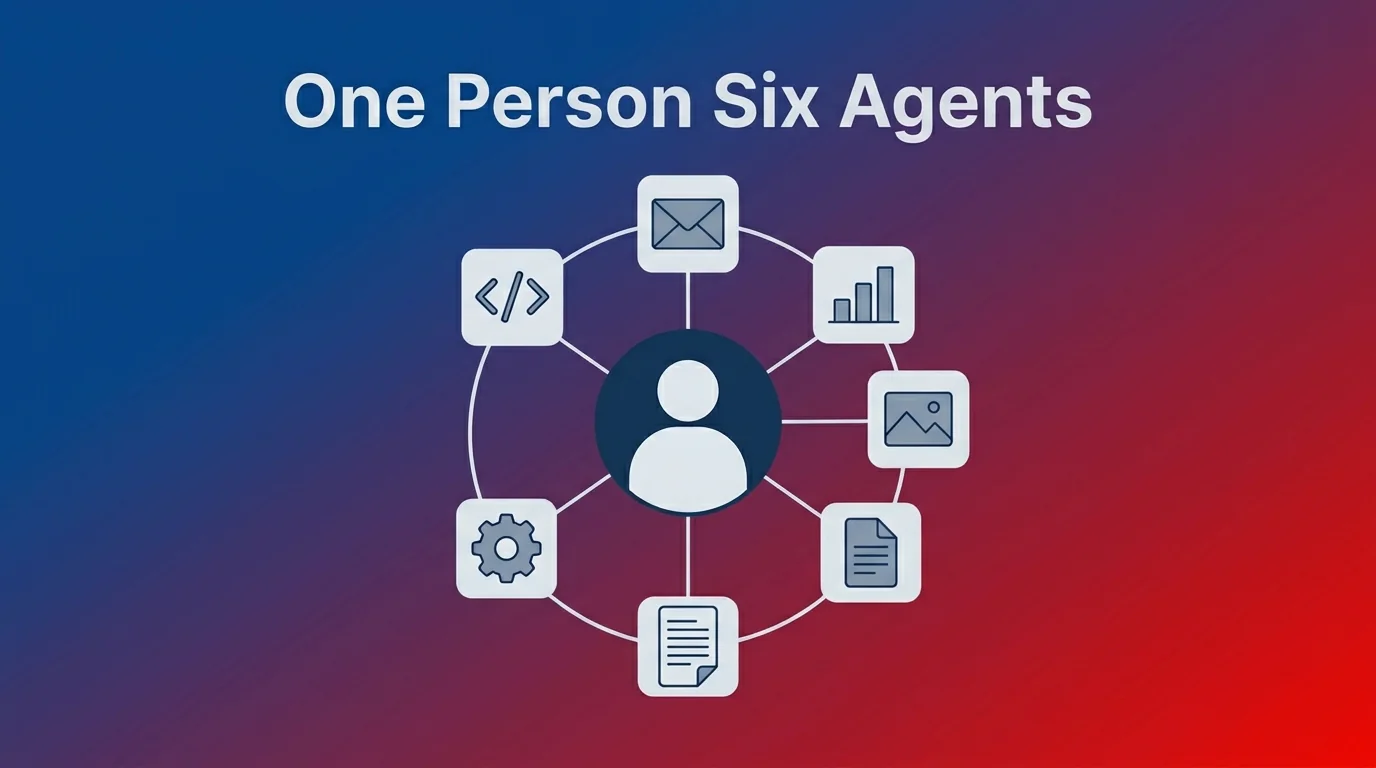
skills enable a single operator to do the work of an entire team
The productivity data coming out of organizations using Claude Skills is striking:
Code output per engineer up 200% at Anthropic over the past year
30% faster PR turnaround in pilot programs using skill-based code review
500,000+ staff hours saved across enterprise deployments
$90M+ in measurable business benefit from 47 enterprise-grade applications
Developer time spent with Claude jumped from 28% to 59% of daily work
But the most compelling examples aren't about code. Anthropic's own growth marketing team built a skill that processes CSV files containing hundreds of ads, identifies underperformers, and generates new variations within strict character limits — producing hundreds of optimized ads in minutes instead of hours.
Their legal team built phone tree systems without writing a single line of code. Data scientists created complex JavaScript visualizations they couldn't have built manually. The pattern is clear: skills democratize capability.
What This Looks Like in Practice
Let me give you a concrete example from our own workflow at Optomize.ai. We built a content engine skill that does the following when triggered:
Researches the topic using multiple sources — web search, API calls, existing knowledge
Writes a full article with rich formatting — headings, lists, blockquotes, inline images, CTAs
Generates images via AI (featured hero, social sharing, inline visuals)
Builds a pixel-perfect preview matching our website's exact styling
Publishes to our CMS with all SEO metadata on approval
One command. Five minutes. A complete, publish-ready blog post with custom images. Previously, this workflow involved n8n orchestration, manual image generation, Contentful uploads, and a rigid 3-paragraph template. Now it's a single skill that produces better output with more flexibility.
The companies winning right now aren't the ones with the biggest teams. They're the ones with the smartest automation.
Enterprise Adoption Is Accelerating
This isn't experimental technology. Major enterprises are already running on skills:
TELUS (57,000 employees) uses Claude as the core engine for their internal Fuel iX platform
Zapier runs 800+ internal Claude-driven agents across engineering, marketing, and customer success
Bridgewater Associates powers investment analysis — drafting Python scripts, running scenarios, and visualizing financial projections
500,000+ skills are already available in community marketplaces like SkillsMP and SkillHub
The ecosystem is mature enough that you can find pre-built skills for almost any workflow — from AWS infrastructure management to Google Workspace automation to TDD development practices.
The MENA Opportunity
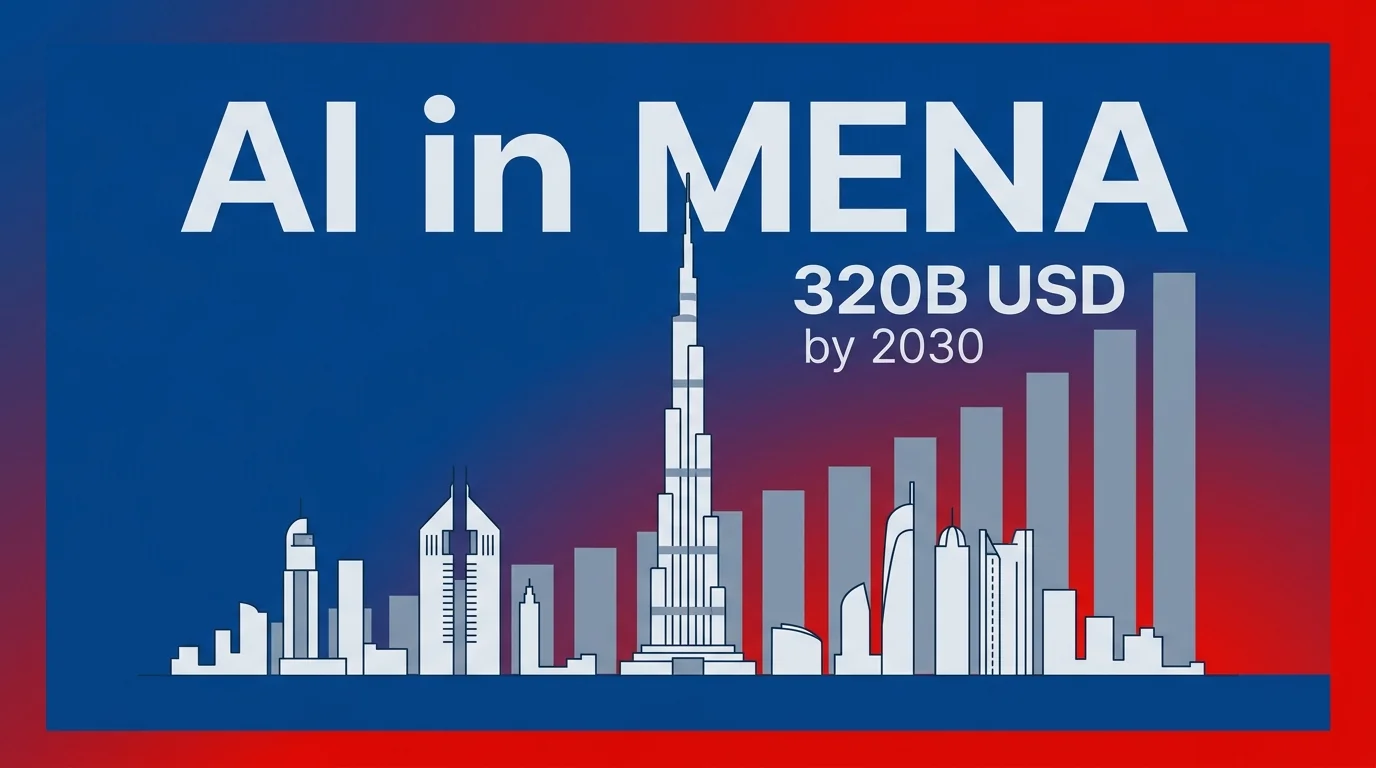
driven business transformation
This matters especially for businesses in the Middle East. The UAE has committed $24.7 billion to generative AI and robotics, with a target to become a leading AI nation by 2031. Abu Dhabi aims to be the first fully AI-powered government by 2027. AI is projected to contribute $320 billion to the MENA economy by 2030.
But here's the gap: most MENA businesses are still in the "let's try ChatGPT" phase. They're using AI for one-off tasks — drafting emails, summarizing documents, brainstorming ideas. That's using a Formula 1 engine to power a golf cart.
Skills represent the next level: systematic AI integration where every repeatable business process — from lead qualification to content creation to financial reporting — runs through an optimized, tested, version-controlled AI workflow. The businesses that make this shift first will have a compounding advantage that's nearly impossible to catch.
How to Get Started
You don't need to overhaul your entire operation. Start with one workflow that you or your team repeats frequently:
Identify the repetition — What task do you explain to AI more than once a week?
Document the process — Write the instructions as a markdown file with clear steps, inputs, and expected outputs
Create the skill — Drop it into
.claude/skills/in your project directoryTest and iterate — Run the skill, evaluate the output, refine the instructions
Share with your team — Commit to git. Everyone gets the capability instantly.
The barrier to entry is remarkably low. If you can write a document explaining how a task should be done, you can create a skill. No code required for basic workflows. For advanced automation, skills can call APIs, run scripts, interact with databases, and orchestrate multi-step processes.
The Optomize.ai Perspective
We've been building with Claude Skills since day one — not just for our clients, but as the backbone of our own operations. Our content engine, client onboarding, lead enrichment, and business intelligence workflows all run on skills.
The shift from "using AI" to "operating with AI" is the single highest-leverage move a business can make right now. And skills are what make that shift practical. They turn Claude from a tool you talk to into a system that works for you — consistently, reliably, and at scale.
The question isn't whether AI will transform your business. It's whether you'll build the systems to make that transformation repeatable.
Want to see what AI Skills can do for your business? Book a discovery call with Optomize.ai — we'll map your automation opportunities and show you exactly where skills can replace manual work.